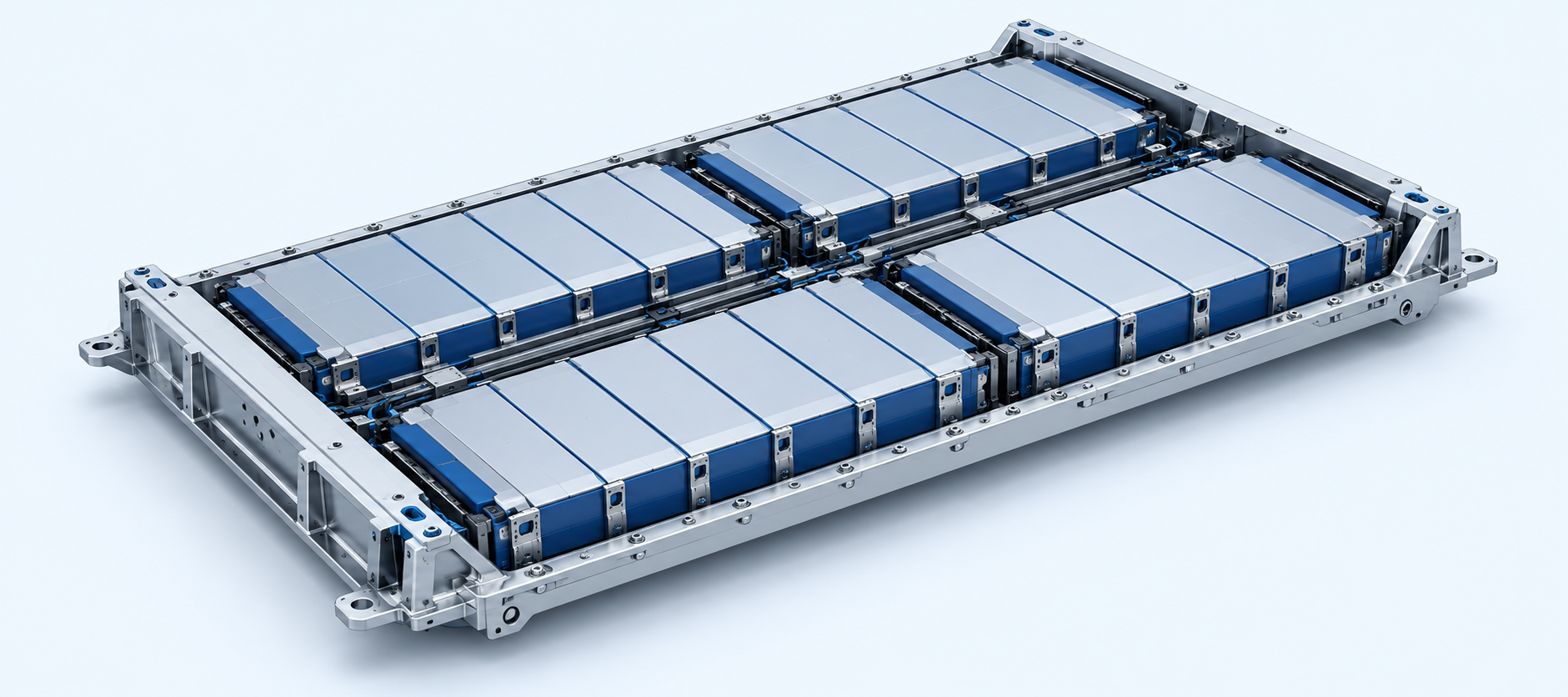
Module & Pack Reliability
Modal Analysis · Vibration · Shock · Fatigue
Which mounts carry the highest loads, and how does changing their stiffness shift a pack resonance?
Structural analysis of EV battery modules and packs, and ESS packs.
Crashworthiness · Materials · Vibration · Swelling · Test–Simulation Correlation
Jaylab is my research archive: literature reviews, mechanics notes and analysis tools.
About & Experience ↗EV Battery · Mechanics · Multiphysics
Modal Analysis · Vibration · Shock · Fatigue
Which mounts carry the highest loads, and how does changing their stiffness shift a pack resonance?
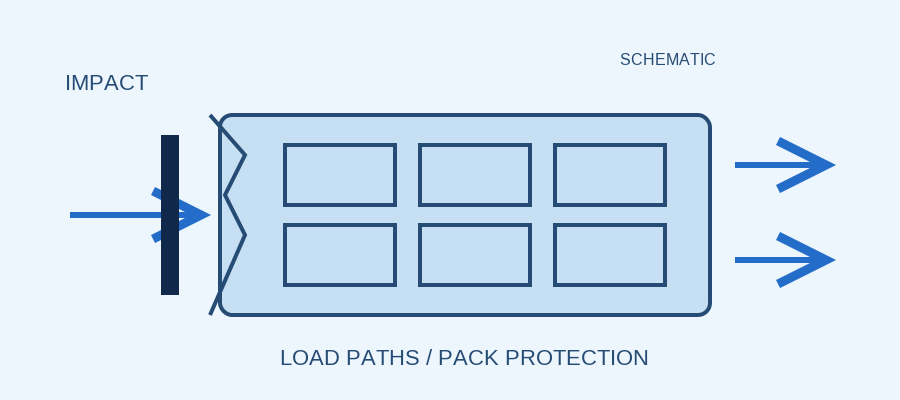
Crash · Crush · Intrusion · Impact
As an enclosure crushes, where does the load travel and how much clearance remains around the cells?
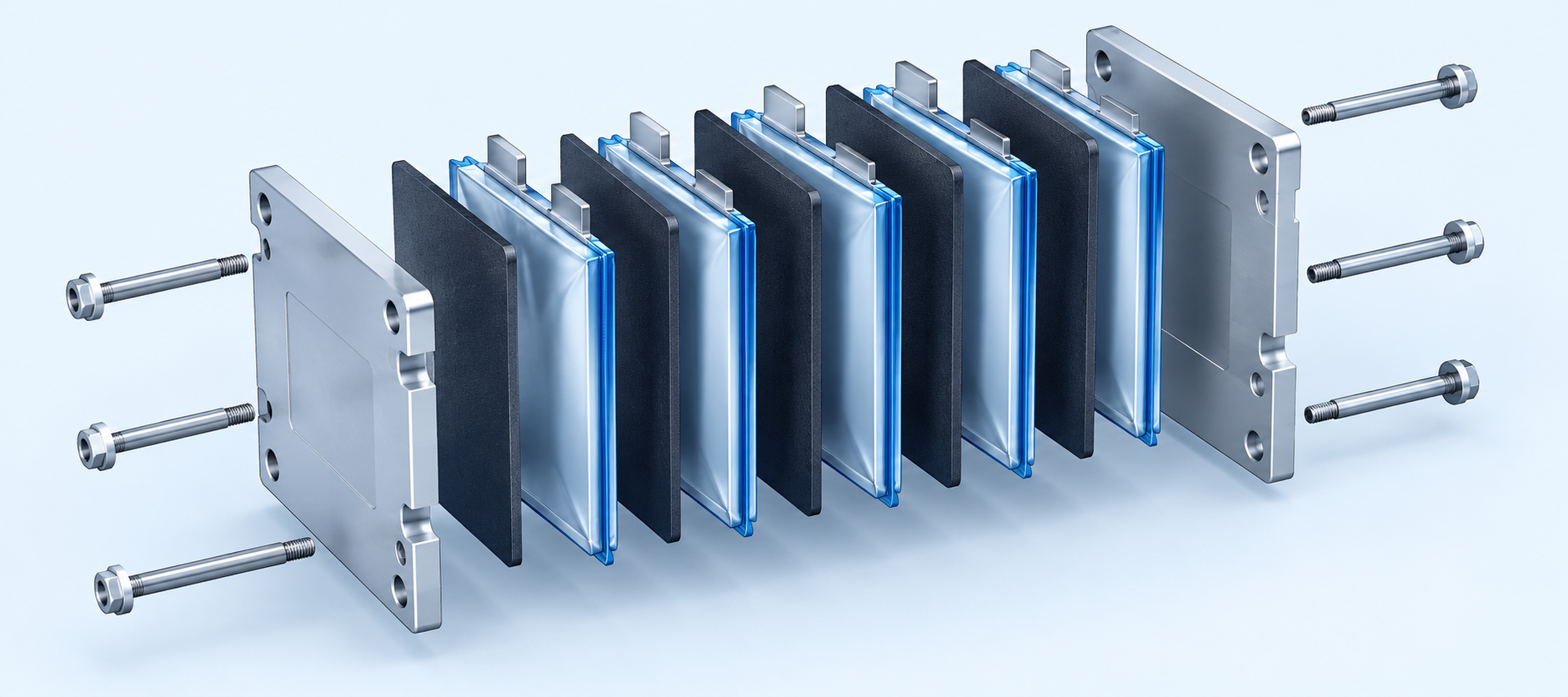
Pouch Cells · Pads · Preload
For a given free swelling of the cells, how much travel is taken up by the pads and how much force reaches the endplates?
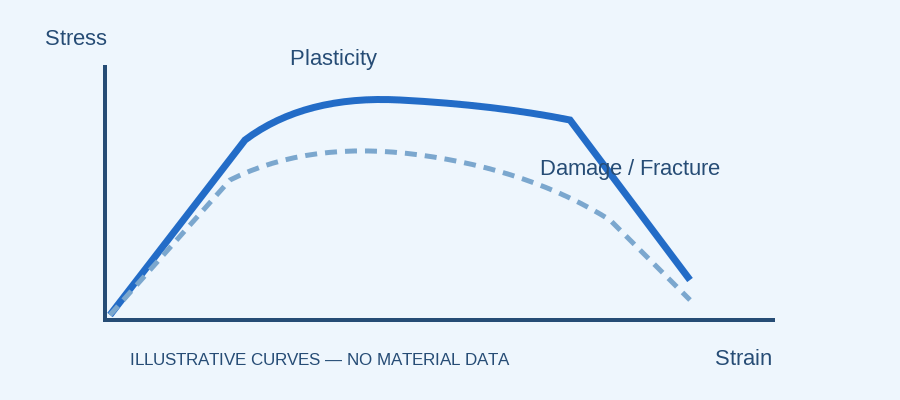
Constitutive Models · Plasticity · Damage · Fracture
Which parts of a tensile test describe plastic flow, and what additional tests are needed to predict failure?
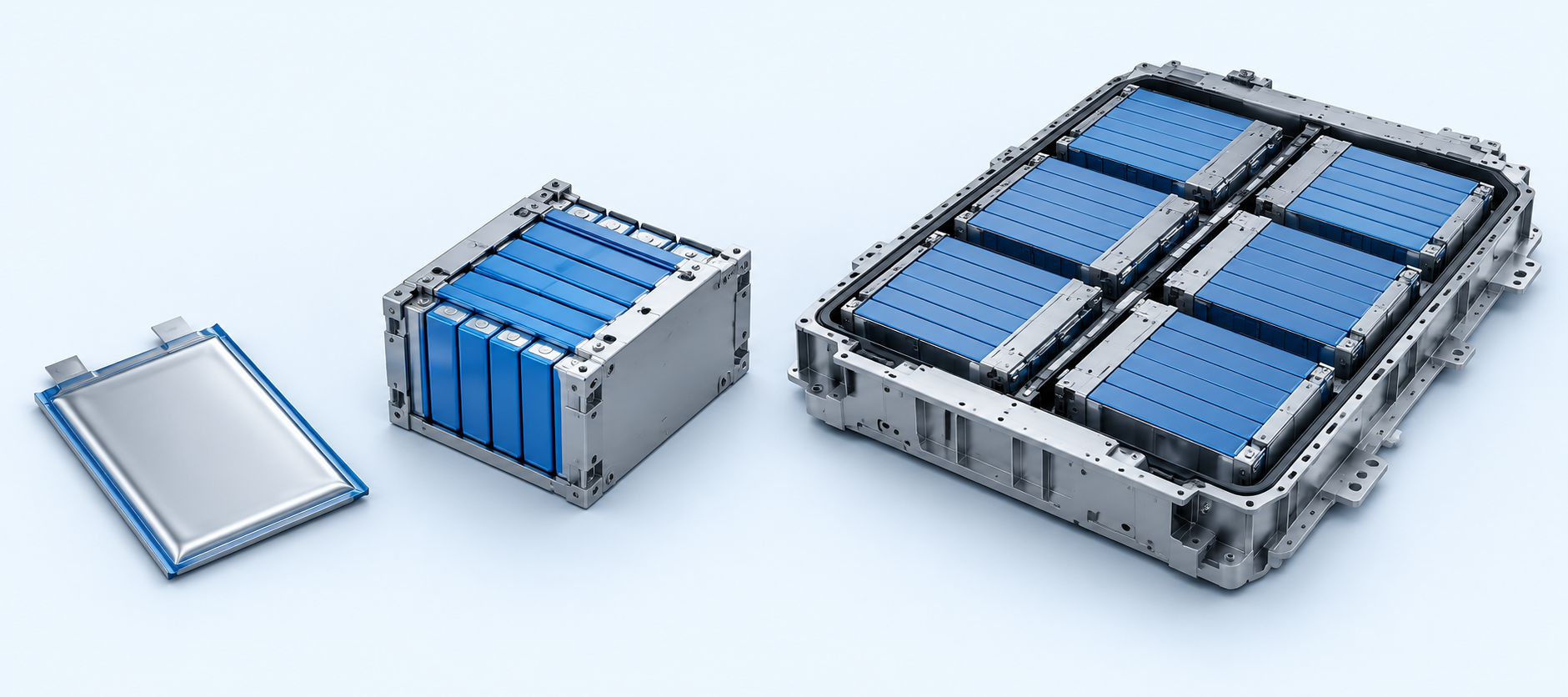
Reduced Models · Electrochemical, Thermal and Structural Coupling
Which temperatures and expansion histories should a cell model pass to a module-scale analysis?
Conceptual illustrations and schematic diagrams; not simulation or experimental results. Pack, swelling and multiphysics images are AI-generated.
Module and pack vibration, mechanical shock, stiffness, weld fatigue and test correlation. Focus: natural frequencies, mode shapes, load paths, material properties, joints and boundary conditions.
Load-Case Experience ↗Cell compression and three-point bending; module and pack shock, crush and intrusion. Model selection connects force–displacement response, deformation patterns and damage locations to the test setup.
Pack Analysis & Scope ↗Electrode and thin-film tension, notched specimens, weld properties, housing fatigue and equivalent cell properties. Material characterization informs constitutive assumptions, failure criteria and test-based model calibration.
Material Testing & Modeling Experience ↗Swelling force–displacement measurement, cell fixture design and module/pack swelling analysis. Initial compression, fixture stiffness, pads and nonuniform cell expansion are treated as explicit model conditions.
Swelling Studio: Model, Checks & Limits ↗Roll pressing, electrode curling and laminate theory. Process loads and material behavior are connected to deformation, residual stress and curl. Particle-level methods shown in cited papers remain literature references.
Electrode-Level Experience ↗Mechanical–electrical–thermal coupling, thermal propagation, Cell-to-Pack concepts and physics-based data analysis are research directions. Public tools document their own assumptions and verification scope; they do not establish thermal-runaway or crash validation.
Methods & Research Directions ↗The most recent publication reviewed in each research area. Reviews are in Korean.
출판 PDF 13쪽 전체·수식·Fig.1–8·Table 1–4 대조. 보정/검증 분리, 재료축과 단락 예측 한계까지 검토합니다.
Read review →보관 원고 17쪽 전체·Fig.1–6·Table 1 대조. 입자/코팅 모델과 파라미터·단위 문제를 검토하며 최종본 대조는 남아 있습니다.
Read review →비활성 구성품과 젤리롤–캔 열 연결을 포함한 3D 전기–열 네트워크 모델을 사용한다. 2170 셀의 냉각 시험과 비교한 뒤 4680·탭 구조·냉각 위치를 바꾸어 계산한다.
Read review →개정 공개본55쪽 전체·수식·Fig.1–20·부록 A–D를 대조했습니다. 정보량 기반 시험 설계, 계수별 오차·잡음·식별성 한계를 상세히 검토합니다.
Read review →전극에서 셀·모듈·시스템으로 이어지는 열폭주 사건을 열·전기·기계·유동 모델로 나누어 연결한다. 계산 효율을 높이기 위한 축약·수치해석·데이터 기반 접근도 비교한다.
Read review →Compare stress–strain curves, then select a pack component to inspect its assigned material.
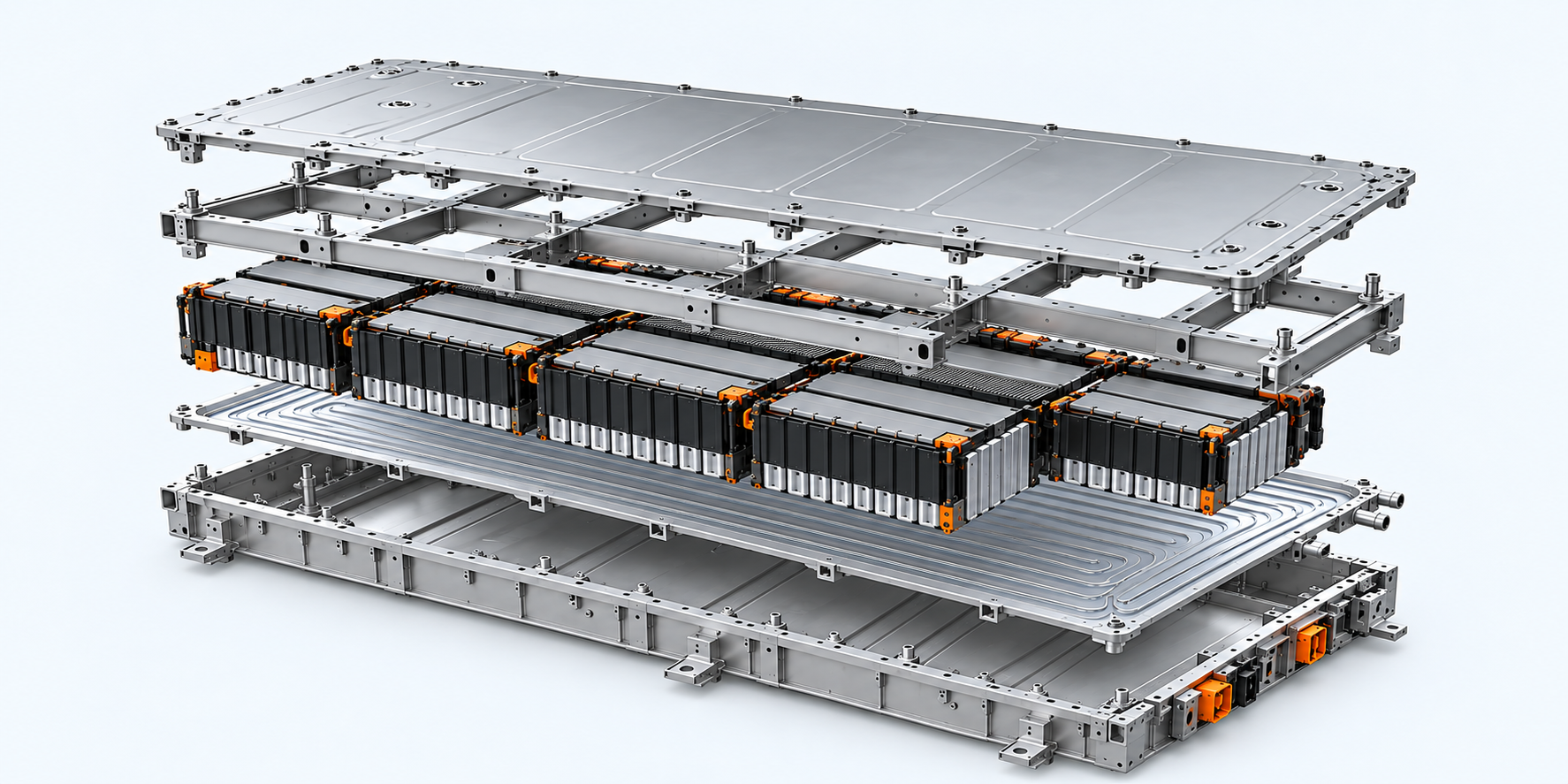 24 MATERIALS / 24 PARTS