RESEARCH EXPERIENCE / EV FIELD
Battery Structural Analysis · Materials, Cells, Modules & Packs
Adapted from my 2022 Research Experience presentation. Selected figures explain the work; the original slides are not published. Literature figures collected in the presentation are distinguished from separately sourced open-access figures.
01 / Research Scope
MicroscaleCellModulePack / System
Electrodes & Materials
Testing
Electrode & Current-Collector Tension
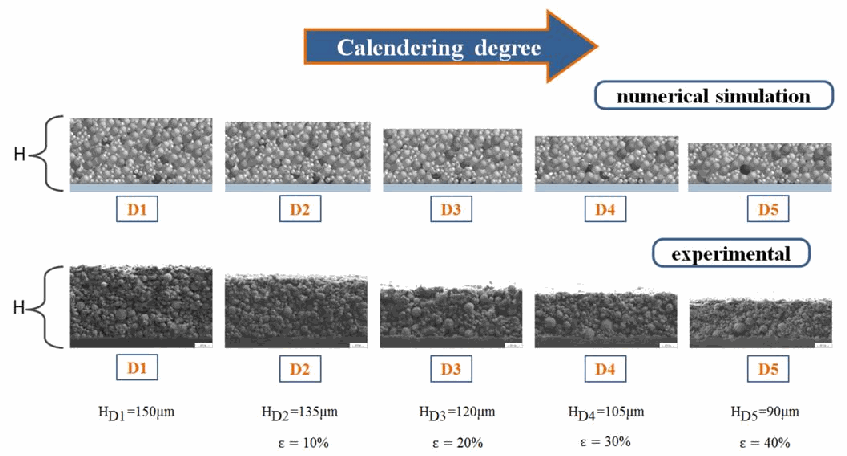
Roll Pressing of Anodes & Solid-State Electrodes
Simulation
Roll-Press Processes
Electrode Curling Based on Laminate Theory
Cells
Testing
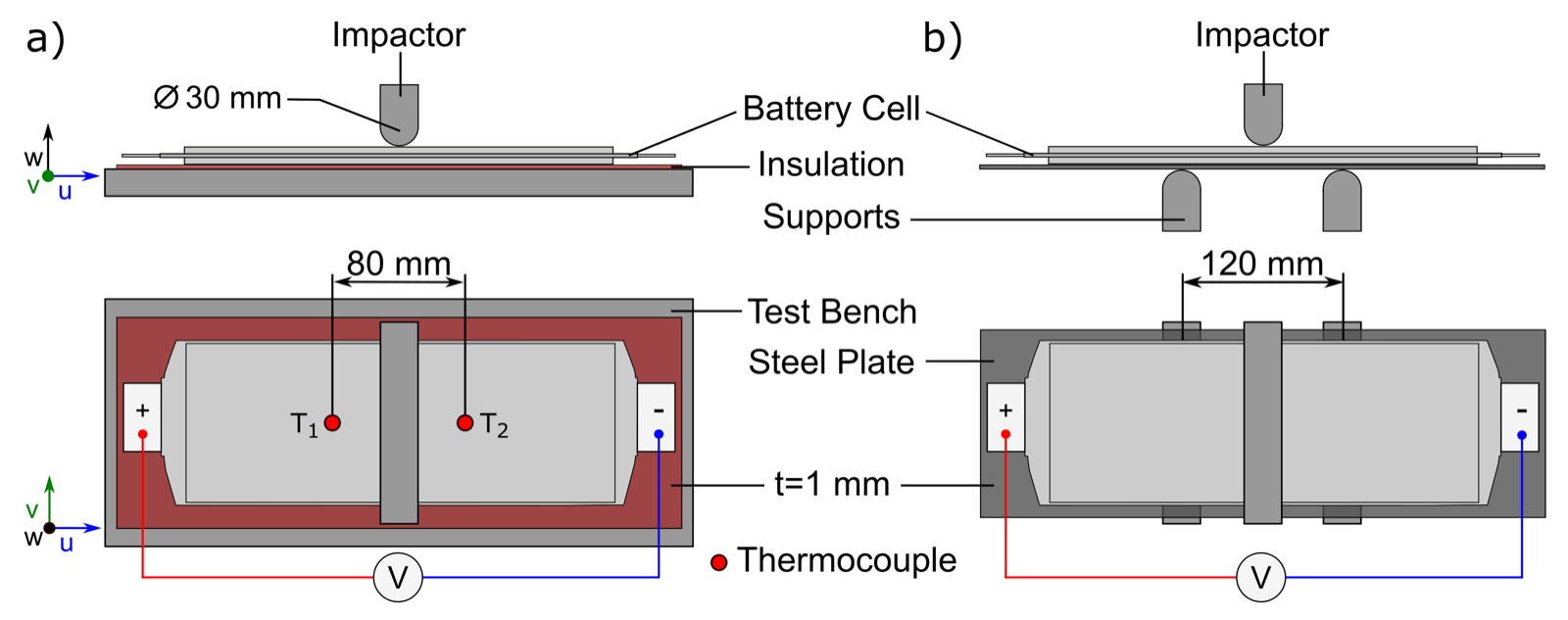
In-Plane Compression · Three-Point Bending · Out-of-Plane Loading
Venting & Gas Generation · Swelling Force–Displacement
Simulation
Equivalent Material Modeling
Cell Test Fixture Design
Modules & Components
Testing
Tensile, Notched-Specimen & Weld Material Properties
Housing Fatigue · Cover Bending
Simulation
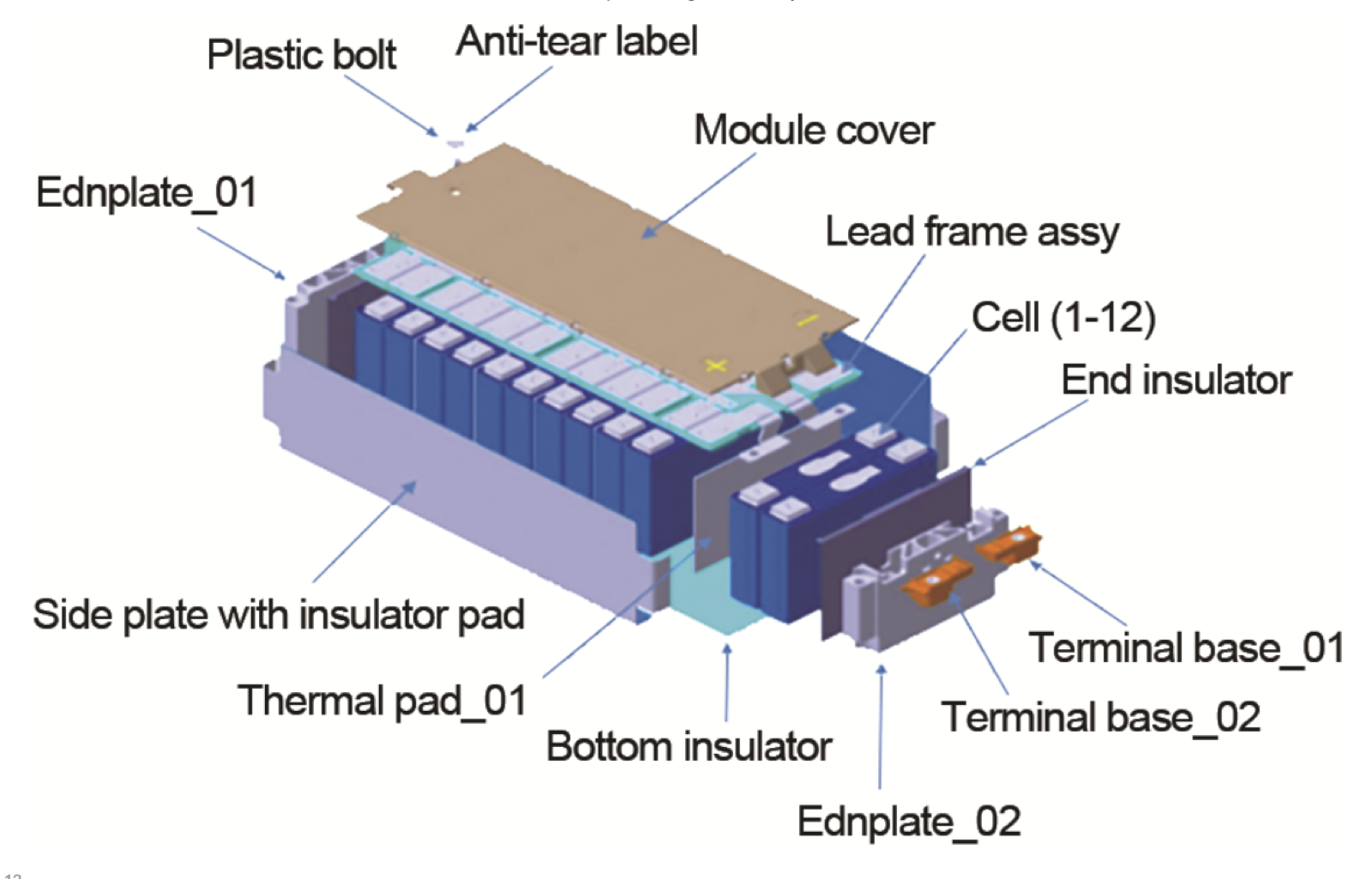
Bending · Vibration · Swelling
Shock · Crush · Drop · Stiffness
Packs & Systems
Structural Focus
Pack Enclosures · Frames · Mounts
Test Correlation & Design Guidelines
Simulation
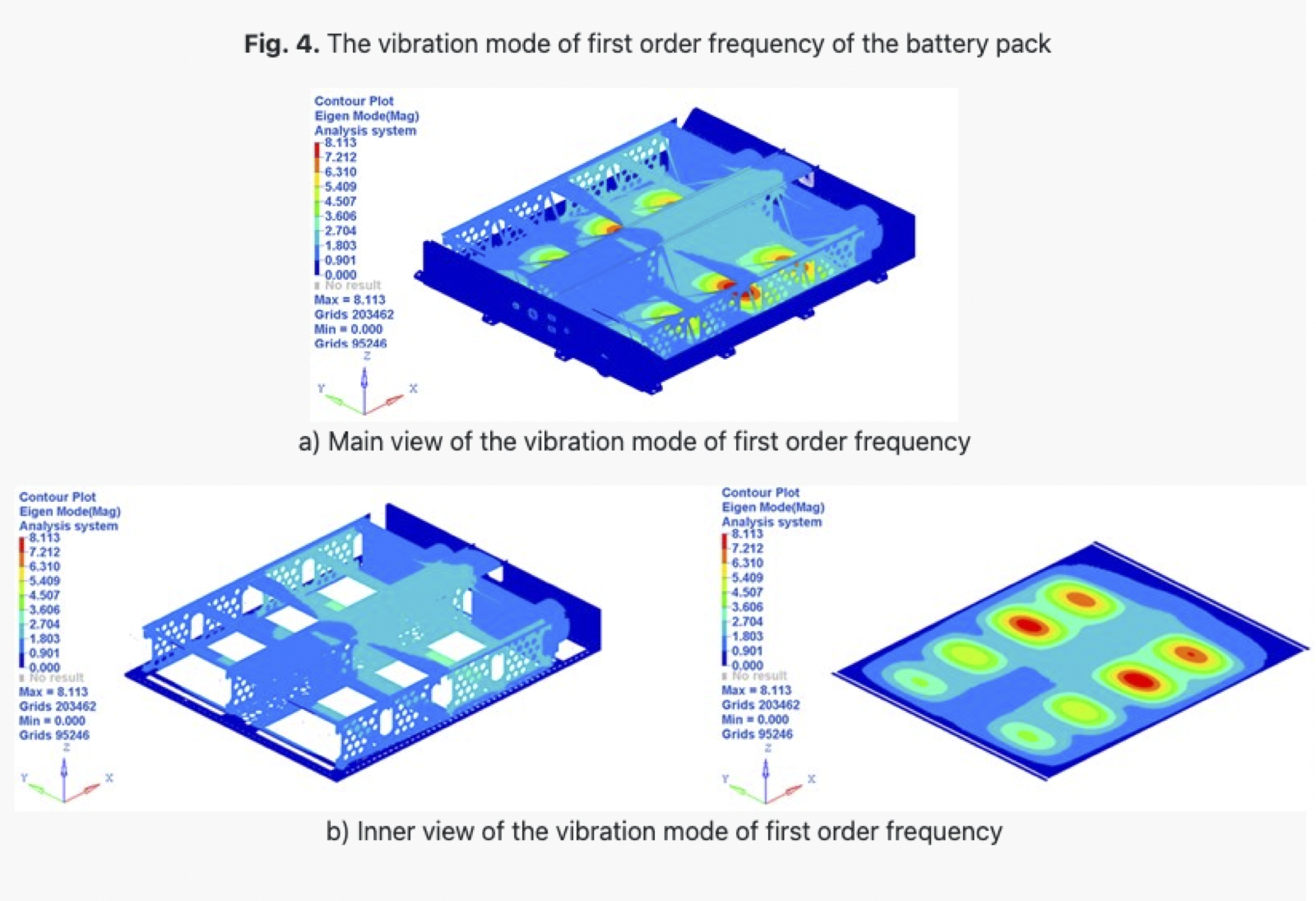
Vibration · Swelling
Mechanical Shock · Crush
02 / Test–Simulation Correlation
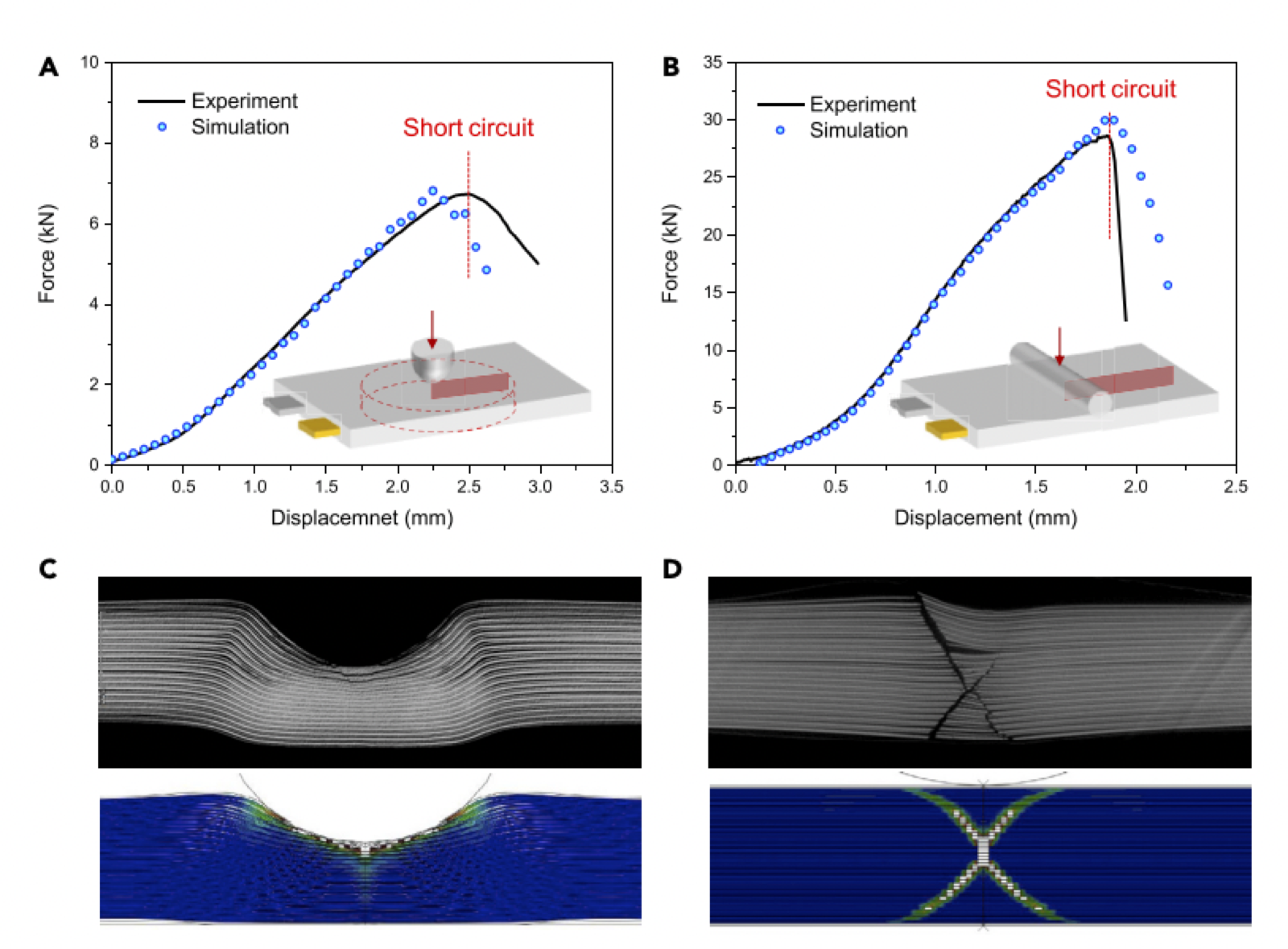
Translate test conditions into simulation models and compare both force–displacement response and deformation patterns.
- Define the TestSpecify supports, indenter geometry, loading rate and measured quantities.
- Build the ModelMatch equivalent properties, contact, boundary conditions and failure criteria to the test.
- Assess CorrelationCompare initial stiffness, peak force, deformation modes and damage locations.
- Connect ScalesUse cell models to inform module- and pack-level structural response assessment.
This workflow summarizes the test and simulation work described in my presentation. Numerical results in the illustrative literature figures are not presented as my own results.
03 / Design Load Cases
Vibration, swelling, shock and crush, with the main outputs considered at module and pack level.
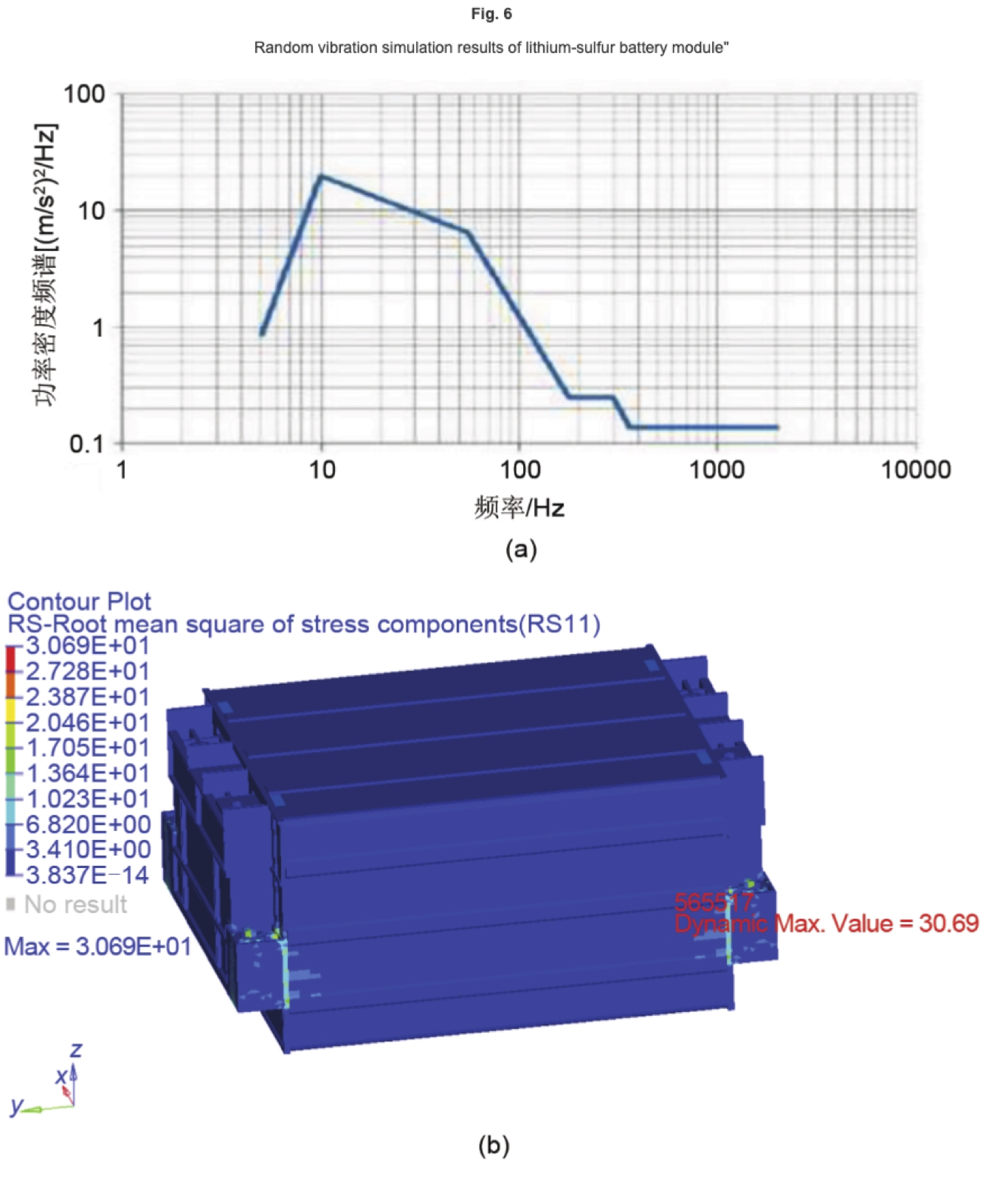
Vibration
Module · Vibration response of components and joints
Pack · Dynamic behavior of enclosures, mounts and covers
Natural Frequencies · Mode Shapes · PSD Response · Fatigue
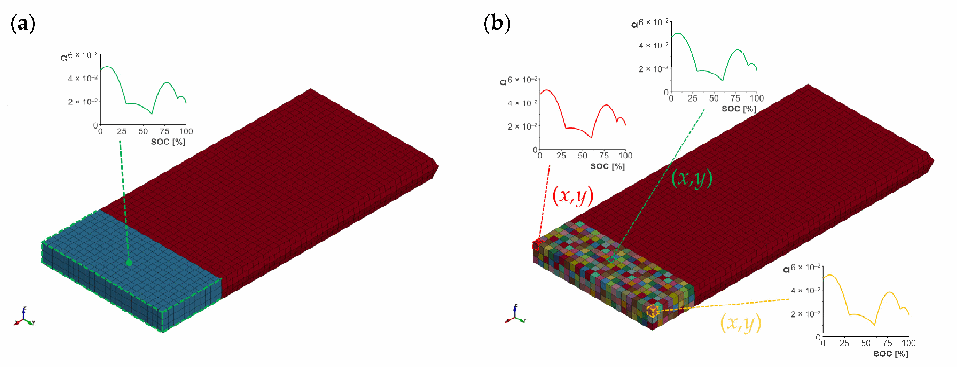
Swelling
Module · Cell swelling constrained by side plates and endplates
Pack · Module arrangement and loads transmitted to the pack structure
Force–Displacement · Contact Pressure · Structural Deformation
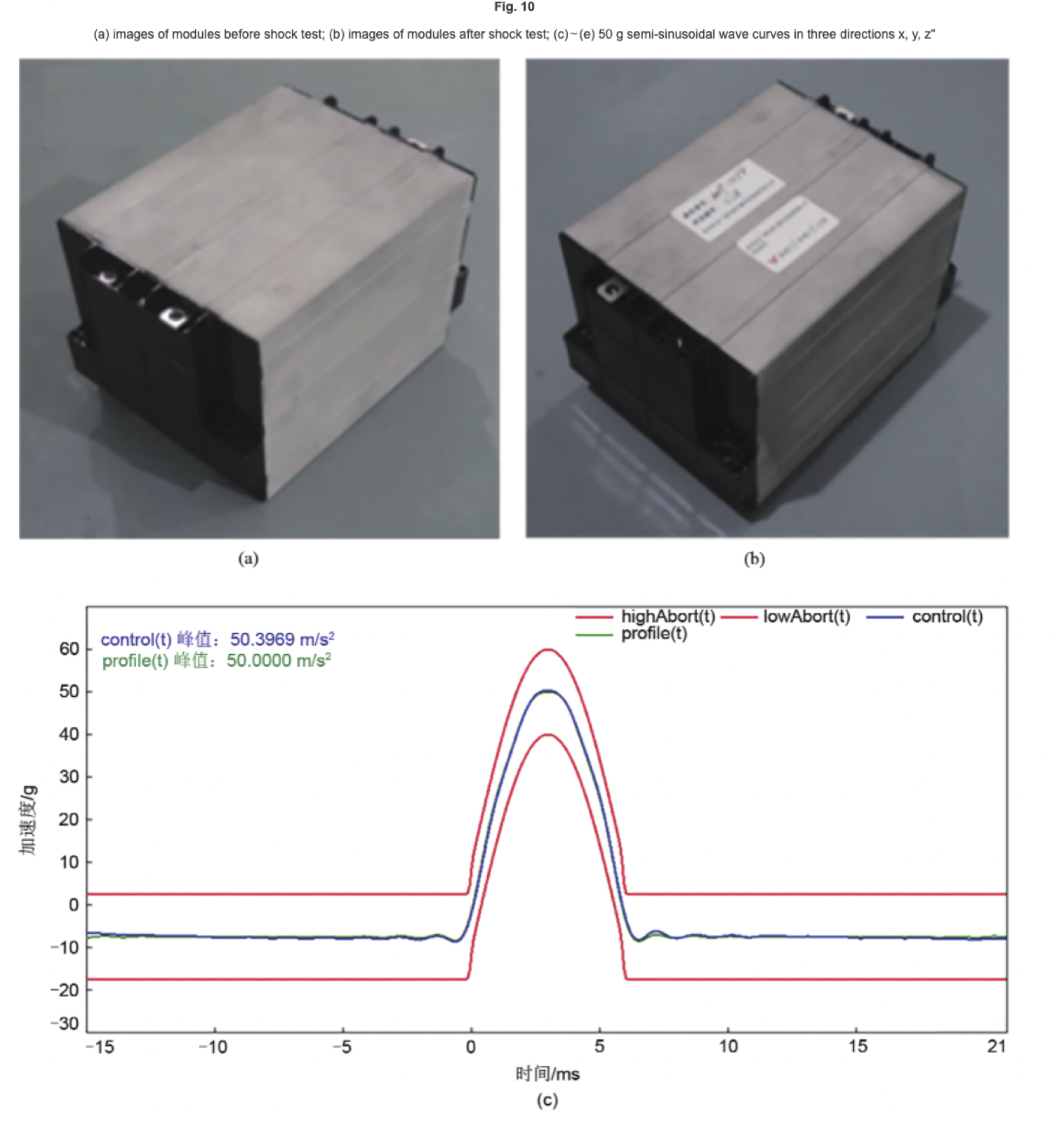
Mechanical Shock
Module · Inertial loading and component/joint response
Pack · Load transfer through mounts and trays
Acceleration · Stress · Joint Loads · Permanent Deformation
Crush
Module · Cell/module compression and local deformation
Pack · Intrusion resistance of enclosures and frames
Force–Displacement · Intrusion · Plastic Deformation · Cell Clearance
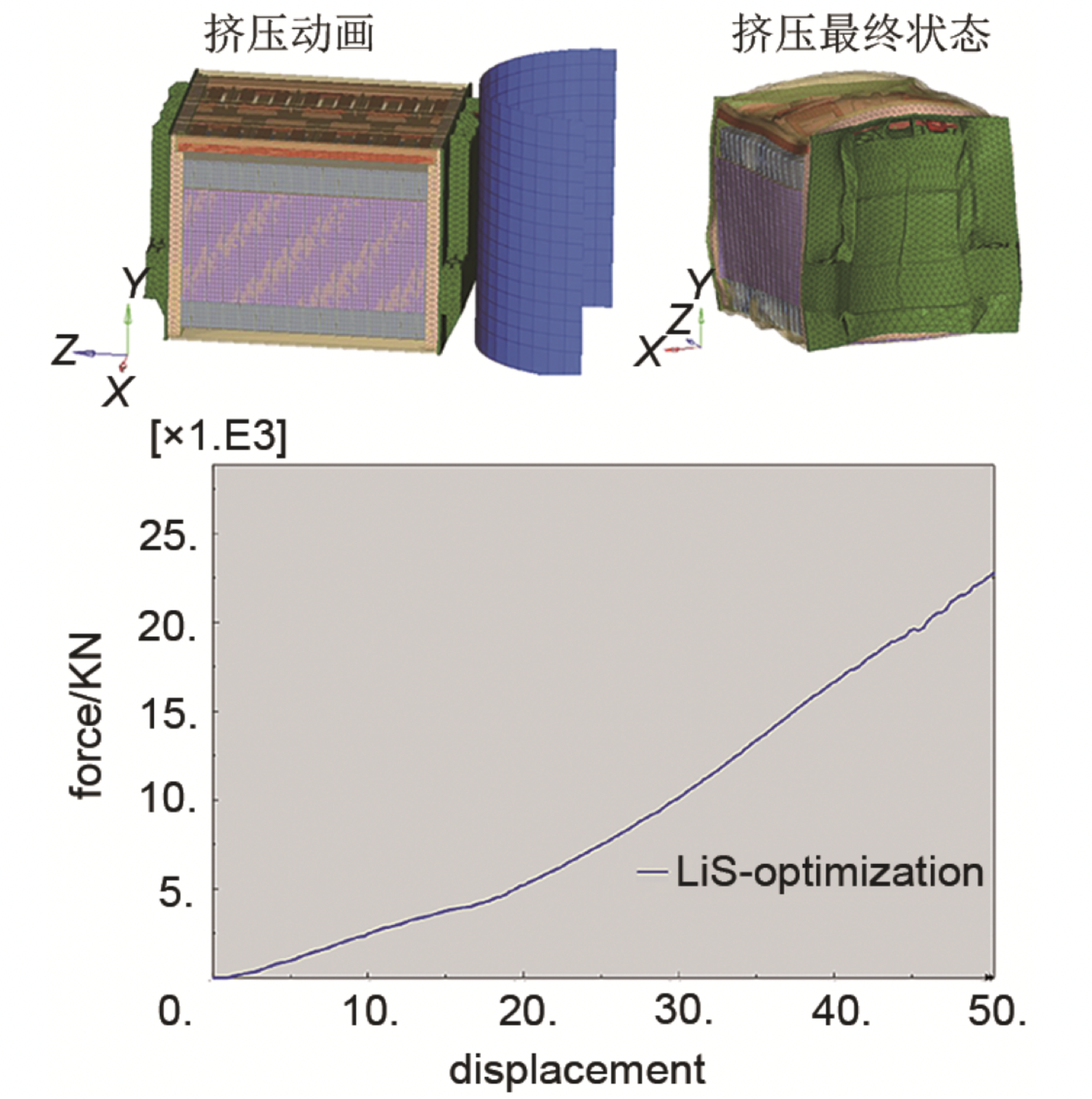
04 / Pack-Level Analysis
Extend the analysis from local module response to load transfer across the pack enclosure, frame and mounts.
Pack Structural Analysis Considerations
- Boundary conditions at vehicle attachments and supports
- Tray, frame, cover and internal components
- Stress concentrations and intrusion at corners and joints
- Correlation using inputs matched to the physical test
Pack assessment considers both cell clearance and load paths. Validation of internal short circuits or thermal runaway requires separate evidence.
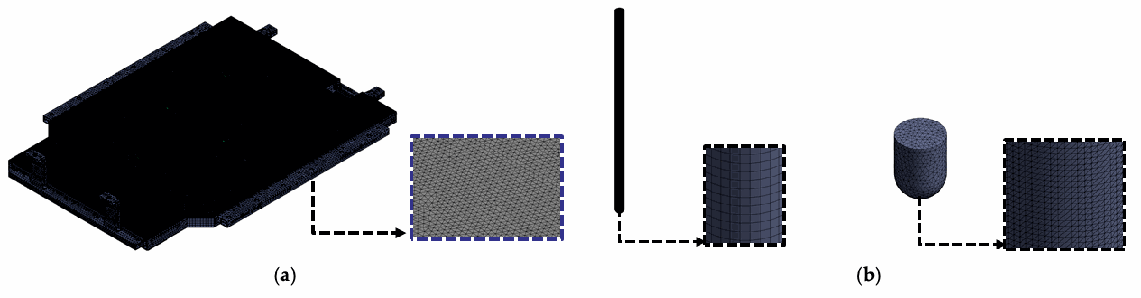
Kim et al. (2025) compared bottom-impact, compression and random-vibration tests with finite element analysis of an aluminum pack enclosure. This is a literature example of structural durability and test correlation, not evidence of electrical short-circuit or thermal-runaway validation.
05 / Research Summary
Vibration · Swelling · Shock · Crush · Structural Test Correlation
Electrode Tension · Notched Fracture · Housing Fatigue · Weld Properties
Analysis Method Development · Design Guidelines · Technical Reports
Finite Element Methods · Continuum Mechanics · Fracture Mechanics · Abaqus · LS-DYNA · HyperWorks · MATLAB · Python
Mechanical–Electrical–Thermal Coupling · Thermal Propagation · Cell-to-Pack · Physics-Based Data Analysis